Kategoria: Ladattavat tiedostot
-

Brand vs Performance Marketing Series Part 3: Integration Strategies and Best Practices
The article discusses integrating brand and performance marketing, providing frameworks for budget allocation, team structures, and campaign design. It identifies common barriers and showcases case studies from successful companies. Key metrics indicate improved business outcomes with balanced marketing strategies, emphasizing the importance of structured collaboration and effective technology use.
-

Master the B2B Tech Event Attendance and Exhibiting: A Comprehensive Guide
The term “event brains” describes the fatigue felt after an event’s conclusion. Despite the exhaustion, events are crucial for B2B marketing, providing visibility and lead generation. Success relies on systematic planning, clear objectives, and structured follow-up strategies. This guide offers comprehensive insights on optimizing ROI from such participation.
-

How to build a viable, wide B2B tech campaign (YOUR practical guide)
A modern B2B campaign requires a strategic blend of in-person events, owned content, paid digital, earned media, and direct channels. Planning must include clear objectives, detailed audience segmentation, and precise tracking through standardized metrics like UTMs and CRM integration to ensure effective attribution and ROI in marketing efforts.
-

Brand vs Performance Marketing Series Part 2: Mapping Marketing to the B2B Buyer Journey
This article translates theory into practice by aligning brand and performance marketing strategies with the B2B buyer journey stages. It highlights the non-linear behavior of buyers and offers stage-specific tactics supported by case studies from companies like Snowflake and Slack, emphasizing the importance of tailored marketing approaches throughout the purchasing process.
-

How to build a viable digital campaign for B2B tech? incl. strategy, channels, tracking, and KPIs
The guide outlines the creation of effective B2B tech digital campaigns, including SEM, social media, and email marketing. It emphasizes measurable objectives, audience building, message crafting, and proper tracking. The document also provides terminology explanations, benchmarks, tools, and a checklist to optimize campaign performance and ROI.
-

Brand vs Performance Marketing Series Part 1: Understanding Brand vs Performance Marketing in B2B Tech
This article outlines the differences between brand marketing and performance marketing for B2B tech companies, illustrating their unique roles. While brand marketing builds long-term value, performance marketing drives immediate conversions. A balanced 60/40 approach is recommended for optimal growth, emphasizing integration over choosing one strategy to ensure sustainable success.
-

important Content Creation Techniques for B2B Tech Marketers: Do’s & Don’ts
Content marketing is vital in the competitive B2B tech sector, with 76% of marketers reporting it enhances lead generation. Despite this, challenges persist in producing high-quality content that resonates with technical audiences. A systematic approach, including understanding personas and optimizing distribution, is essential for impactful content creation and measurable business outcomes.
-

Inbound vs Outbound Marketing in B2B Tech: How AI + SEO Changed the Game for Good
The discussion centers on inbound versus outbound marketing in B2B tech, highlighting their distinct roles. Inbound builds authority and trust through self-education, while outbound targets specific accounts for awareness. AI and SEO enhance both strategies, emphasizing personalized outreach and content discoverability. Effective integration leads to improved metrics and pipeline growth.
-

Vibekoodattujen markkinointityökalujen integrointi vanhoihin järjestelmiin: helppo ja nopea opas nykyaikaisille markkinoijille
The rising trend of vibecoded marketing tools empowers marketers to create tailored solutions using AI-assisted platforms. However, integrating these tools with existing legacy systems poses significant challenges. A comprehensive guide offers strategies for successful integration, addressing technical barriers and providing actionable examples to enhance marketing efficacy and ROI.
-
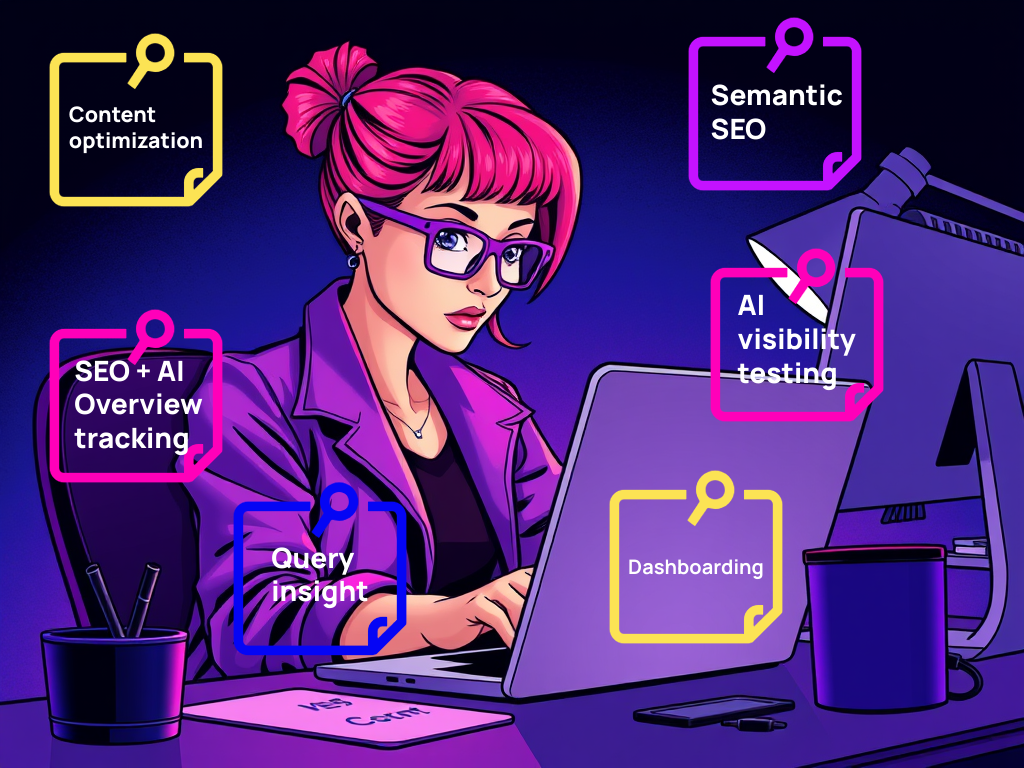
AI SEO & Visibility: How B2B Tech Companies Can Measure, Improve, and Win in 2026
The search landscape for B2B marketers is evolving rapidly, emphasizing AI SEO (AIEO, AEO) over traditional methods. Companies must adapt by optimizing content for AI-driven searches and measuring visibility through new metrics. Effective AI visibility is crucial for maintaining relevance and competitive advantage in an increasingly digital marketplace.

- 14.01.2026
C-Mimmi-O-uutiset - 03.12.2025
C-Mimmi-O-uutiset - 05.11.2025
C-Mimmi-O-uutiset - 06.10.2025
C-Mimmi-O-uutiset - 03.09.2025
C-Mimmi-O-uutiset - 06.08.2025
C-Mimmi-O-uutiset - 03.07.2025
C-Mimmi-O-uutiset


AI is used to research and to compile content on this website. The articles have been reviewed by the author. The sources for the content are added for transparency.
Tekoälyä käytetään myös sarjakuvankaltaisten kuvien luomiseen verkkosivustolle.